
CCTV survey: $300–$750
Stands alone and is credited against the works by most operators. Without it nobody can price a liner honestly.
Relining turns a recurring drainage problem into a finished one. The joints that roots come through are sealed along the whole run, so there is no way back in, and nothing above the pipe gets disturbed to do it.
The failure that brings most people here is not a broken pipe. It is a joint. Older drainage is laid in short lengths, so a single run has a great many joints, and after decades of ground movement and root pressure they open a fraction at a time until something backs up.
A liner seals all of them in one pass, which is why it changes the pattern rather than resetting it. Cutting roots out clears the pipe and leaves the way in exactly as it was, and the interval to the next blockage is set by how fast they grow back.
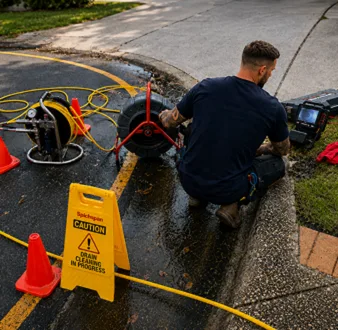
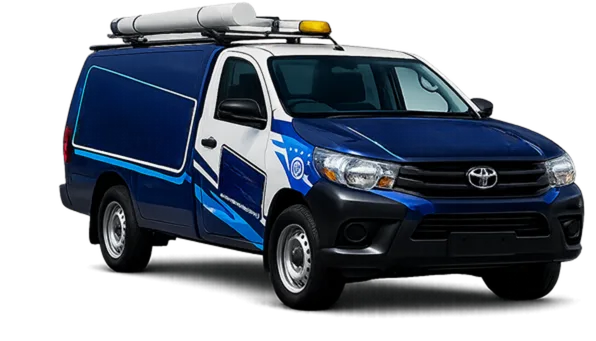
Very few homes of this age are still on their original layout. A second bathroom, a kitchen moved to the other side of the house, a granny flat out the back: each addition was joined into a system sized for the original plan.
The junctions where those additions were cut in are a common failure point, and they are worth looking at specifically. Relining handles a poor junction well, provided the camera has found it first.
Restaurants and food shops around The Crescent and Ware Street push fat and oil into older shared drains, where it congeals into rock-hard blockages.
For a shop, café or clinic the real cost of a drainage repair is rarely the invoice. It is the days the doors do not open, and an excavation through a floor or a car park is measured in days.
A liner is installed from an existing access point and cures in hours, which is why commercial work is so often scheduled overnight or across a single closed day. The trading interruption is usually the deciding factor, not the price per metre.
Fairfield is a major town centre in south-west Sydney (postcode 2165), bordered by Fairfield West, Canley Vale, Smithfield and Yennora. Its post-war fibro and brick housing, busy shopping streets and creek-laced terrain make blocked drains one of the suburb’s most common call-outs.
Excavating on a slope is a different job from excavating on the flat. Access for a machine is often impossible, the spoil has to go somewhere, trench walls need support, and reinstating a tiered garden or a retaining structure can cost more than the drainage work it was dug for.
Relining sidesteps all of it. The line is repaired from an existing access point, and the surface above stays exactly as it is. On a difficult block the saving is not marginal, it is often the difference between doing the job and deferring it.
Orphan School Creek and its tributaries thread through the suburb, and low-lying blocks near the corridors see stormwater drains overwhelmed in heavy rain.
Most people associate relining with sewers, but stormwater suffers the same failures and reline just as well: cracked lengths, open joints, roots, and sections that have silted because the fall has flattened. On a property that floods in every serious downpour, the line is often the reason rather than the rain.
The camera run matters more here than anywhere. Clearing a surcharging pit at the height of a storm tells you almost nothing; the same line inspected on a dry day tells you whether you have a blockage or a defect.
Mature street trees across Fairfield’s residential grid send roots into loose pipe joints, matting together until the line is completely choked.
Cutting roots out clears the pipe and does nothing about the way in. The joint they came through is still open, the tree is still looking for water, and the interval before the next blockage is set by how fast it grows back. That is why a jetted line often reblocks on a schedule you could almost diary.
A liner seals the full run, joints included, so there is no opening left to find. It is the one intervention that changes the pattern instead of resetting the clock.
The most expensive time to discover a failing sewer is after new tiling has gone down. The second most expensive is after the slab for an extension has been poured over it.
A camera run costs a fraction of either and takes an hour. If you are getting quotes for a renovation on a house of this age, book it in the same fortnight. Where relining is needed it is far cheaper before the works than after.
Stands alone and is credited against the works by most operators. Without it nobody can price a liner honestly.
The usual Sydney range for domestic sewer. Access and junction reinstatement are normally quoted separately.
One defect in an otherwise sound run. The proportionate answer on stable ground, and the wrong answer on a line with twenty tired joints.
Where the camera shows the same failure repeating along the length. Ends the problem rather than relocating it.
The honest comparison. Cheaper on an open lawn, rarely cheaper under a driveway, paving or a building.
Figures reflect the 2026 Sydney market rather than a quote. You get your own number once we have seen inside the pipe. Figures here are indicative of the 2026 Sydney market rather than a quote from us, you get your own number as a fixed price before any work starts.

We find the fault, measure it from an access point, and check the fall is intact. That last check is what stops a liner being installed into a belly.
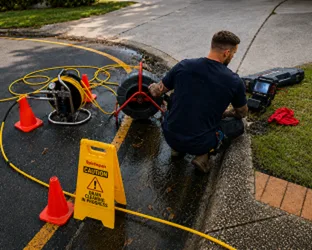
Per metre, with access and junction reinstatement itemised, and the excavation comparison alongside it so you can see both.
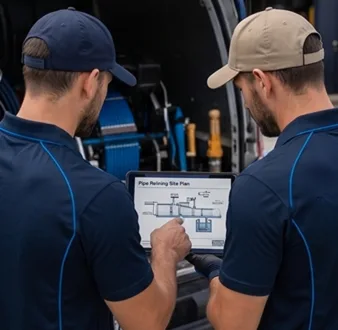
Clean, install, cure. One access point, one day for most homes, and no trench across the property.

Branches reopened, final footage, certificate and notification. Keep it with the property file, it is worth real money at sale.
Send it through and we will come back with what it is likely to be, what the survey costs, and whether relining is even the right conversation.
Straight answers on price, durability and when to dig instead.

Ring us or leave your details. You will get a time for the inspection, not a price invented over the phone.

Leave your details and our local Fairfield team will call you back fast.